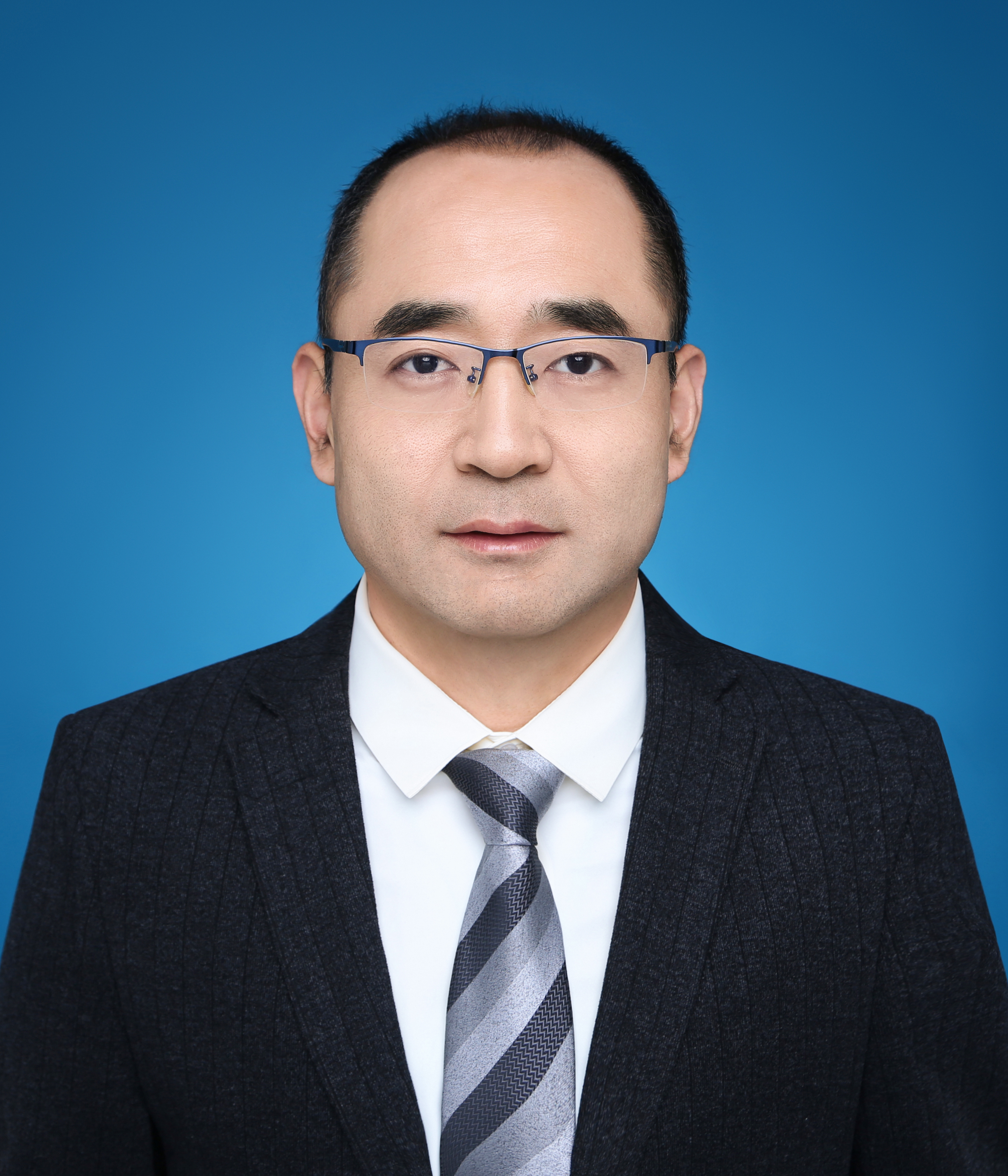
张大林
博士 、教授 、博士生导师
博士 、教授 、博士生导师
| 办公电话: | 电子邮件: dalin@bjtu.edu.cn |
| 通讯地址:学活1002-1 | 邮编:100044 |
张大林,1983年生,籍贯内蒙古,博士,教授,博士生导师。2014年7月毕业于北京邮电大学,获计算机科学与技术专业工学博士学位,并于同年7月来北京交通大学从事教学科研工作。2016至2017年在普渡大学(美国)电子与计算机工程系从事博士后研究。
2014年07月至2021年03月,北京交通大学 国家轨道交通安全评估研究中心 教师
2016年11月至2017年12月,普渡大学 博士后
2021年03月至2024年07月,北京交通大学 软件学院 教师,系主任
2024年08月至今 北京交通大学 网安学院 教师, CNAS/CMA实验室主任、信息安全实网教学实验室主任、实验教学中心主任
软件安全、机器学习、ITS
本科课程: 数据结构
研究生课程:软件缺陷检测与可信评估实践、软件工程建模与形式化方法 、经验软件工程(博)
[56]TIF-DE: A GNSS/INS Positioning Framework with Track Irregularity Fingerprint Constraints for Heavy-Haul Railways, IEEE Transactions on Instrumentation & Measurement,2026(中科2区,学生一作)
[55]A Non-Stationary Spatiotemporal Hawkes Process for Railway Delay Causality Learning, Jubao Cheng, Dalin Zhang, etc, DASFAA 2026(CCF B, 学生一作)
[54]Towards Adaptive Network Defense: A Self-evolving Threat Detection Framework, C Guo, D Zhang, International Conference on Information Security and Cryptology, 296-312(学生一作)
[53]Optimizing Symbolic Execution Path Exploration with a Transfer Learning-Based Strategy, T Sun, D Zhu, L He, D Zhang, INTERNATIONAL JOURNAL OF COMPUTERS COMMUNICATIONS & CONTROL 20 (5)(学生一作)
[52]A Communication-Efficient Federated Contrastive Learning Framework for Intrusion Detection, C Guo, J Cheng, S Yang, D Zhang, International Conference on Intelligent Computing, 294-305(学生一作)
[51]A Normalizing Flow-Based Semi-Supervised Method for Imbalanced Network Intrusion Detection, C Guo, S Yang, J Cheng, D Zhang, INTERNATIONAL JOURNAL OF COMPUTERS COMMUNICATIONS & CONTROL 20 (4)(学生一作)
[50]A Data-Driven Assessment Model for Metaverse Maturity, M Tang, J Cao, Z Fan, D Zhang, I Pandelica, International Journal Of Computers Communications & Control 19 (4)(学生一作)
[49]Weina Zhang, Dalin Zhang, Jintao Liu, Lianying He, A trustworthiness assessment for software based on multi-source evidence fusion, Reliability Engineering & System Safety,Volume 266, Part B,2026.(中科1区,学生一作)
[48]Yi Xu, Honghui Li, Chang Wu, Yunjuan Peng, Xilu Du, Hongwei Wang, Sabah Mohammed, Alessandro Calvi, Dalin Zhang*, Multivariate event hypergraph diffusion model for train delay prediction, Transportation Research Part C: Emerging Technologies, Volume 182, 2026(中科1区,学生一作)
[47]Zhang, D., Mohammed, S., & Calvi, A. (2024). Guest Editorial: Electro‐mobility for urban traffic and transportation. IET Intelligent Transport Systems, 18(4), 555-557.
[46]Zhang, D., & Luković, I. (2024). Guest editorial: Explainable and trustworthy methods for next-generation artificial intelligence for reasonable data size. Computer Science and Information Systems, 21(4), 0-0.
[45]D. Zhang, C. Du, Y. Peng, J. Liu, S. Mohammed and A. Calvi, "A Multi-Source Dynamic Temporal Point Process Model for Train Delay Prediction," in IEEE Transactions on Intelligent Transportation Systems, doi: 10.1109/TITS.2024.3430031 (SCI 1区, ESI高被引论文+热点论文)
[44]Path Exploration Strategy for Symbolic Execution based on Multi-strategy Active Learning, Internetware 2024 (CCF C,学生一作)
[43]基于主动学习的符号执行路径探索策略,山东大学学报(工学版),2024,(学生一作)
[42] Mingrui Yang, Dalin Zhang:Deep Reinforcement Learning Guided Decision Tree Learning For Program Synthesis. SANER 2023: 925-932(学生一作)
[41] Dalin Zhang, Sabah Mohammed, Alessandro Calvi, Electro-mobility for urban traffic and transportation, IET Intelligent Transport Systems,2024
[40] Y Sun, K Liu, Y Li, D Zhang, Towards an Open-Source Industry CAD: A Review of System Development Methods, Tehnički vjesnik 29 (6), 2127-2136
[39] Y Zhang, D Zhang, X Liu, W Peng, Y Mu, Y Li, Q QiuA Practical Statin Recommendation System Based on Real-World Data to Improve LDL-C Management in Secondary Prevention, Journal of Cardiovascular Pharmacology 81 (5), 373-380
[38] Peng, Y.; Qiu, Q; Zhang, D.; Yang, T.; Zhang H.(2023). Ensemble Learning for Interpretable Concept Drift and Its Application to Drug Recommendation, International Journal of Computers Communications & Control, 18(1), 5011, 2023.(学生一作)
[37] 张大林, 张哲玮, 王楠, 刘吉强. AutoUnit:基于主动学习和预测引导的测试自动生成[J]. 计算机科学, 2022, 49(11): 39-48.
[36] D. Zhang, Y. Xu et al., "An Interpretable Station Delay Prediction Model Based on Graph Community Neural Network and Time-Series Fuzzy Decision Tree," in IEEE Transactions on Fuzzy Systems, 2022(SCI 1区)
[35] Xu, Yi; Zhang, Dalin; Peng, Yunjuan; Wang, Nan; Lu, Lingyun; Liu, Jiqiang (2022): DCGCN: Dynamic community graph convolutional network for traffic forecasting. TechRxiv. Preprint. https://doi.org/10.36227/techrxiv.21256608.v1
[34] Zhang, D., Peng, Y., Xu, Y. et al. A high-speed railway network dataset from train operation records and weather data. Scientific Data 9, 244 (2022). (Nature子刊,SCI 2区)
[33] Zhao, Y., Wang, Y., Zhang, Y., Zhang, D., Gong, Y., & Jin, D. (2022). ST-TLF: Cross-version defect prediction framework based transfer learning. Information and Software Technology, 106939.(SCI 2区)
[32] Y Zhao, Y Wang, D Zhang, Y Gong. "Eliminating the high false‐positive rate in defect prediction through BayesNet with adjustable weight." Expert Systems (2022).(SCI 4区)
[31] 徐邑,张大林,彭云鹃,王楠,吴道华, “C-MATGCN:一种用于高铁站点延误预测的图社区多注意力卷积网络” , 2022中国空间数据智能学术会议SpatialDI, 2022.
[30] D. Zhang, Y. Xu, Y. Peng, Y. Zhang, D. Wu, H. Wang, J. Liu, S. Mohammed, and A. Calvi, “Prediction of train station delay based on multiattention graph convolution network,” Journal of Advanced Transportation, vol. 2022. (SCI 3区)
[29] D. Zhang, J. Fiaidhi, and C. Ramos, “Intelligent processing of multimedia signals,” 2022. (SCI 4区)
[28] D. Zhang, S. Mohammed, and A. Calvi, “Fuzzy logic systems for transportation engineering,” Journal of Intelligent & Fuzzy Systems, no. Preprint, pp. 1–8, 2021.(SCI 4区)
[27] 张大林,张哲玮,王楠,刘吉强, ”AutoUnit:基于主动学习的预测引导的单元测试自动生成”, 2021CCF中国软件大会, 2021.
[26] Q. Lyu, D. Zhang, R. Da, and H. Zhang, “Refuzz: A remedy for saturation in coverage-guided fuzzing,” Electronics, vol. 10, no. 16, p. 1921, 2021. (SCI 4区)
[25] D. Zhang, Y. Peng, Y. Zhang, D. Wu, H. Wang, and H. Zhang, “Train time delay prediction for high-speed train dispatching based on spatio-temporal graph convolutional network,” IEEE Transactions on Intelligent Transportation Systems, 2021. (SCI 1区)
[24] Y. Wang, J. Liu, D. Zhang, and X. Qiu, “Reasoning about recursive tree traversals,” in Proceedings of the 26th ACM SIGPLAN Symposium on Principles and Practice of Parallel Programming, 2021, pp. 47–61. (CCF A)
[23] Z. Jiang, H. Li, D. Zhang, R. Wang, J. Zhang, X. Li, M. Zhang, and P. Wang, “A review of software reliability testing techniques,” Journal of computing and information technology, vol. 28, no. 3, pp. 147–164, 2020.
[22] S. Mohammed, H. R. Arabnia, X. Qu, D. Zhang, T.-H. Kim, and J. Zhao, “Ieee access special section editorial: Big data technology and applications in intelligent transportation,” IEEE Access, vol. 8, pp. 201331–201344, 2020.
[21] Y. Sun, H. Gong, Y. Li, and D. Zhang, “Hyperparameter importance analysis based on n-rrelieff algorithm,” International Journal of Computers Communications & Control, vol. 14, no. 4, pp. 557–573, 2019.
[20] Y.-l. Sun and D.-l. Zhang, “Machine learning techniques for screening and diagnosis of diabetes: a survey,” Technical Gazette, vol. 26, no. 3, pp. 872–880, 2019.
[19] Y. Sun and D. Zhang, “Diagnosis and analysis of diabetic retinopathy based on electronic health records,” Ieee Access, vol. 7, pp. 86115–86120, 2019.
[18] Y. Zhang, J. Zhang, D. Zhang, and Y. Mu, “Survey of directed fuzzy technology,” in 2018 IEEE 9th International Conference on Software Engineering and Service Science (ICSESS). IEEE, 2018, pp. 1–4.
[17] J. Zhang, Q. Xue, and D. Zhang, “Mining usage profile to improve web performance testing,” International Journal of Services Operations and Informatics, vol. 9, no. 3, pp. 189–206, 2018.
[16] D. Zhang and X. Qiu, “Applying gis and multilayered interactive cellular automata to high-speed train control system modeling,” in 2018 7th International Conference on Computers Communications and Control (ICCCC). IEEE, 2018, pp. 86–90.
[15] H. Li, A. Zhao, D. Zhang, and J. Zhang, “Research on building software usage model based on uml model,” International Journal of System Assurance Engineering and Management, vol. 9, no. 3, pp. 675–683, 2018.
[14] Y. Zhang and D. Zhang, “An attitude determination method for comprehensive inspection vehicle based on track profile registration,” Periodica Polytechnica Transportation Engineering, vol. 45, no. 4, pp. 181–185, 2017.
[13] D. Zhang, J. Sui, and Y. Gong, “Large scale software test data generation based on collective constraint and weighted combination method.” Technical Gazette, vol. 24, no. 4, 2017.
[12] D. Zhang, “High-speed train control system big data analysis based on the fuzzy rdf model and uncertain reasoning,” International Journal of Computers Communications & Control, vol. 12, no. 4, pp. 577–591, 2017.
[11] Y. Chen, S. Zhao, B. Cheng, and D. Zhang, “The design of warehouse security monitoring system based on collaborative linkage of multi-sensor,” in 2015 4th International Conference on Computer Science and Network Technology (ICCSNT), vol. 1. IEEE, 2015, pp. 315–319.
[10] Y. Liu, S. Zhao, B. Cheng, and D. Zhang, “Heterogeneous sensors access middleware platform based on osgi,” in 2015 4th International Conference on Computer Science and Network Technology (ICCSNT), vol. 1. IEEE, 2015, pp. 447–451.
[9] Y. Liu, S. Zhao, B. Wu, B. Cheng, and D. Zhang, “Design and implementation of a data-oriented business process management system,” in 2015 4th International Conference on Computer Science and Network Technology (ICCSNT), vol. 1. IEEE, 2015, pp. 441–446.
[8] D. Zhang, G. Yin, D. Jin, Y. Gong, T. Wu, and H. Zhang, “A hybrid static analysis refinement approach within internetware environment,” in Proceedings of the 7th Asia-Pacific Symposium on Internetware, 2015, pp. 141–147.
[7] T. Wu, J. Zhang, D. Zhang, and D. Jin, “Static analysis refinement on defect path segment,” in 13th National Conference on Embedded System Technology. Springer, Singapore, 2015, pp. 45–57.
[6] Y. Xiao, D. Jin, and D. Zhang, “A method of tainted data detection based on static code analysis,” in International Conference on Mechatronics, 2015.
[5] Y. Liu, D. Jin, and D. Zhang, “Log system based on software testing system design and implementation,” in 2015 4th International Conference on Mechatronics, Materials, Chemistry and Computer Engineering. Atlantis Press, 2015, pp. 1326–1332.
[4] 张大林, 金大海, 宫云战, 等. 基于缺陷关联的静态分析优化[J]. 软件学报, 2014, 25(2): 386-399.
[3] 张大林, 金大海, 宫云战, 等. 基于踪迹挖掘的自动缺陷警报分类方法[J]. 中国科学: 信息科学, 2014 (001): 91-107.
[2] D. Zhang, D. Jin, Y. Xing, H. Zhang, and Y. Gong, “Automatically mining similar warnings and warning combinations,” in 2013 10th International Conference on Fuzzy Systems and Knowledge Discovery (FSKD). IEEE, 2013, pp. 783–788.
[1] H. Zhang, D. Zhang, D. Jin, Y. Gong, and C. Wang, “Automatically mining high level patterns of software faults within methods,” in 2013 13th International Conference on Quality Software. IEEE, 2013, pp. 196–199.
2016年 北京交通大学优秀教学成果 二等奖
2019年 全国民营科技发展贡献奖 一等奖
[IJCCC] The top 50 most-cited articles (2006-2020)
2020年 全国生产力促进奖(创新发展)二等奖
2022年 北京交通大学“教书育人先进个人”
2022年 北京交通大学就业创业贡献奖
2022年 北京交通大学优秀硕士论文指导教师(1篇)
2023年 北京交通大学优秀硕士论文指导教师(3篇)
2024年 北京青年优秀科技论文
2024年 北京交通大学优秀班主任
2024年 优秀本科论文指导教师
2025年 Web of Science ESI 高被引论文+热点论文
2025年 科学试验设计创新大赛 三等奖
2026年 北京交通大学优秀硕士论文指导教师(张伟娜同学)
1、计算机学会 软件工程专委会执行委员、容错计算专委会执行委员
2、期刊特邀主编:
EURASIP Journal on Wireless Communications and Networking(SCI,2018)
International Journal of Open Source Software and Processes (EI,2018)
Journal International Journal of Computers and Applications(EI,2019)
IEEE ACCESS(SCI,2020)
MULTIMEDIA TOOLS AND APPLICATIONS(SCI,2020)
The International Journal for the Computer and Telecommunications Industry(SCI,2021)
IET Intelligent Transport System (SCI,Special Issue : Electro-Mobility for Urban Traffic and Transportation,2021)
Journal of Organizational and End User Computing(SCI,Special Issue On: Network Traffic Monitoring and Analysis For Quality of Experience at End Users,2021)
Computational Intelligence and Neuroscience(Special Issue on Interpretable Methods of Arti®cial Intelligence Algorithms,2022)
Computer Science and Information Systems(Special Issue XAI,2024)
3、期刊编委:
Journal of Cybernetics and Information Technologies(控制论与信息技术期刊2023年6月开始被SCI检索,欢迎投稿!)
4、期刊审稿人
软件学报、计算机学报、中国科学:信息科学、Technical Gazette、Future Generation Computer Systems、IEEE ACCESS、International Journal of Modelling and Simulation、International Journal for RF Technologies: Research and Applications等期刊。